
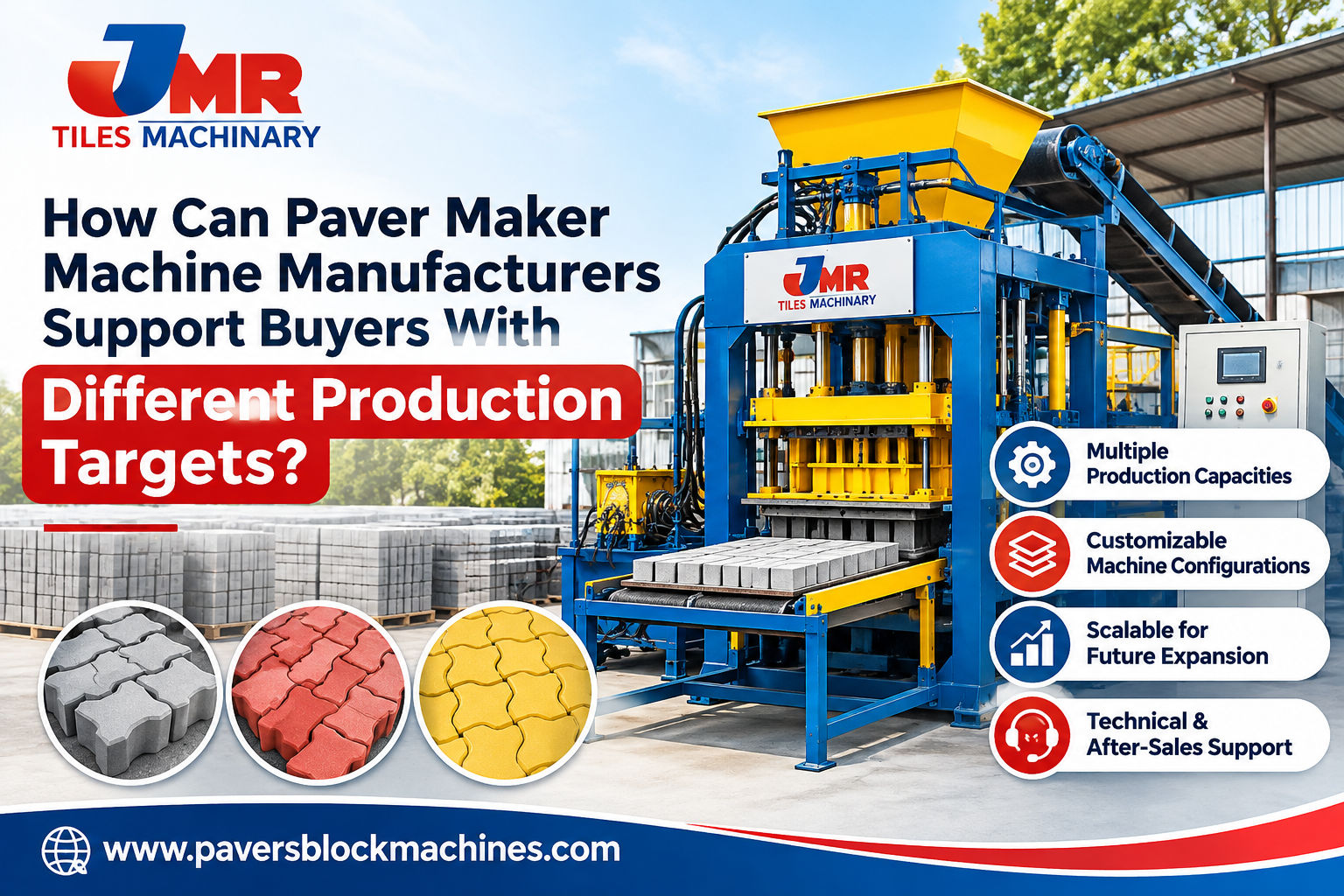
Every paver manufacturing business has different production requirements. While a small unit may focus on fulfilling local orders, a large construction supplier may need thousands of paver blocks regularly. Choosing the right Paver Maker Machine requires more than comparing prices or checking production capacity. Buyers need equipment that matches their current workload and allows them to handle increasing orders without frequent operational difficulties.
At JMR Tiles & Machinery, we understand that production targets vary from one buyer to another. The right machinery recommendation should consider business size, expected output, available resources, and future expansion plans.
Understanding Different Production Requirements
Not every buyer needs a high capacity production setup. Investing in equipment that produces more blocks than required can increase unnecessary expenses, while a low capacity machine may create delays when orders increase. Manufacturers should first understand the buyer’s business model, available workspace, expected daily output, labour availability, and investment capacity. These details help identify suitable machinery for new entrepreneurs as well as established construction material suppliers.
Recommending the Right Machine Capacity
Production capacity is one of the most important considerations when selecting machinery. Manufacturers should explain the expected output of different models and help buyers compare available options. Before recommending a suitable setup, they should evaluate the following factors:
- Daily production targets: Number of blocks required per shift.
- Working hours: Daily operating duration and production schedules.
- Product variety: Different shapes, thicknesses, and designs required.
- Available resources: Workspace, labour, electricity, and raw materials.
- Future requirements: Possibility of handling larger orders.
This assessment helps buyers avoid investing in equipment that does not match their business requirements.
Supporting Small, Medium, and Large Production Units
Different business sizes require different levels of manufacturing support. A small business may need a compact setup with manageable operating requirements. Medium sized manufacturers generally look for equipment that handles regular commercial orders while offering flexibility in product designs. Large production units usually require higher output and reduced manual involvement. Manufacturers should understand these differences before suggesting machinery. The objective should be to recommend equipment according to actual production requirements rather than offering the same configuration to every buyer.
Flexibility in Moulds and Product Designs
Production targets are not limited to the number of blocks manufactured. Buyers also need to consider the variety of products they intend to supply. Some businesses manufacture standard interlocking pavers, while others receive orders for different shapes, thicknesses, and surface patterns. Manufacturers can explain available mould options and customization possibilities. This flexibility helps businesses serve residential projects, commercial complexes, parking areas, footpaths, and industrial premises without investing in separate machinery for every design.
Why Technical Support Matters After Installation?
Purchasing paver maker machine is only the beginning of production. Buyers also need assistance with installation, operator training, operating procedures, and maintenance. A dependable manufacturer should explain how to operate the equipment, maintain important components, and identify common production issues. Timely technical assistance becomes particularly important when businesses work with strict delivery schedules. We believe proper guidance helps buyers use their equipment efficiently and maintain consistent production.
Planning for Future Production Targets
Production requirements can change as a business receives new contracts and expands its customer base. Therefore, buyers should discuss future requirements before finalising their machinery. Manufacturers can help assess whether the selected setup offers sufficient flexibility for increased workloads. They should also explain additional resource requirements, including labour, storage space, raw materials, and curing arrangements. Planning these factors early helps businesses manage expansion without unnecessary operational changes or additional investment.
Conclusion
Choosing suitable machinery requires a clear understanding of production goals, available resources, and future business plans. Manufacturers who consider these factors can help buyers avoid unsuitable investments and establish practical production arrangements. At JMR Tiles & Machinery, we focus on understanding individual requirements and providing suitable Paver Maker Machine solutions. Our aim is to help businesses maintain consistent output, handle changing orders, and build production capacity with confidence.
FAQs – Frequently Asked Questions
- How should buyers select machinery according to production targets?
Buyers should compare daily output requirements, working hours, available resources, product designs, and future business expectations before selecting suitable equipment.
- Can one machine manufacture different paver block designs?
Yes, depending on mould compatibility, suitable moulds can help manufacture different shapes, sizes, thicknesses, and patterns.
- Why is after sales support important when purchasing machinery?
It helps buyers manage installation, operator training, maintenance, and technical problems while reducing unnecessary production interruptions.
- What factors affect the production capacity of a paver manufacturing unit?
Machine capacity, mould size, raw material availability, labour, operating hours, and curing arrangements all influence daily production.
- Should new businesses invest in fully automatic paver manufacturing machinery?
Not necessarily, new businesses should consider their investment capacity, expected orders, available workforce, and production goals before selecting machinery.