
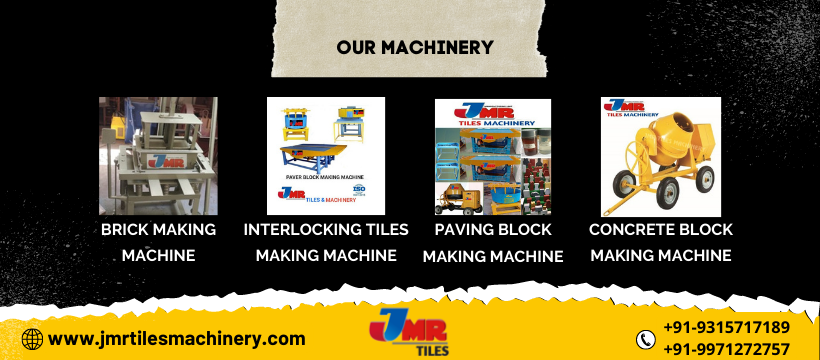
Construction patterns are changing after every few years and with that the need for raw materials is also changing. Interlocking tiles are no longer limited to small walkways or basic layouts. They are now widely used in residential projects, commercial spaces, industrial areas and landscaping designs. To meet this growing demand manufacturers are shifting from manual production methods to advanced automation. This gives rise to the use of automatic interlocking tiles making machines that are crucial for high and quality production of tiles.
From small to large, every business is switching from manual production to automatic production to boost their business growth. In this blog, we are stating a few reasons why automatic interlocking tiles making machines are replacing manual methods.
Limitations of Manual Tile Making
Manual methods have served the industry for years but they come with clear challenges. Production depends heavily on labor skills which leads to uneven tile thickness strength variations and surface defects. Output remains limited and scaling production becomes difficult during high demand. Quality checks often require rework which increases time and material wastage. Over time these limitations affect profitability and brand reputation.
Precision and Consistency through Automation
Automatic machines are designed to deliver uniform results batch after batch. Controlled vibration pressure and mold alignment ensure that every tile meets the same quality standards. This level of consistency is almost impossible to achieve with manual production. Using an interlocking tiles making machine helps us maintain accurate dimensions, smooth finishes and better compressive strength which directly impacts the life of the tiles.
Faster Production without Compromising Quality
Speed is one of the biggest reasons automatic machines are replacing manual methods. Automated cycles allow continuous production with minimal downtime. Instead of relying on physical effort machines handle compaction vibration and demolding with precision. Higher output does not mean lower quality. In fact automation improves overall finish and reduces rejection rates making the entire process more efficient.
Lower Operating Costs over Time
While automation may seem like a higher initial investment it proves cost effective in the long run. Reduced dependency on skilled labor lowers recurring expenses and production losses. Material usage becomes more efficient with less wastage and better mixing control. Energy optimized systems ensure that operational costs remain balanced even at higher production levels.
Supporting Large Scale and Custom Projects
Modern infrastructure and real estate projects require large volumes of tiles with strict quality standards. Automatic machines make it easier to handle bulk orders and customized designs without affecting timelines. An advanced interlocking tiles making machine allows us to adapt molds patterns and finishes quickly which helps meet diverse client requirements efficiently.
To conclude
Choosing an automatic interlocking tile making machine is not about replacing people but about improving quality and overall production. It brings stability, predictability and scalability to tile manufacturing. The shift toward automatic systems is driven by the need for quality efficiency and sustainable growth. We at JMR Tiles & Machinery, believe that investing in the right tiles making machine can help lay the right foundation for any interlocking tile manufacturing business. We are continuously supporting both small and large businesses by offering machines that are known for advanced performance and dependable features.